
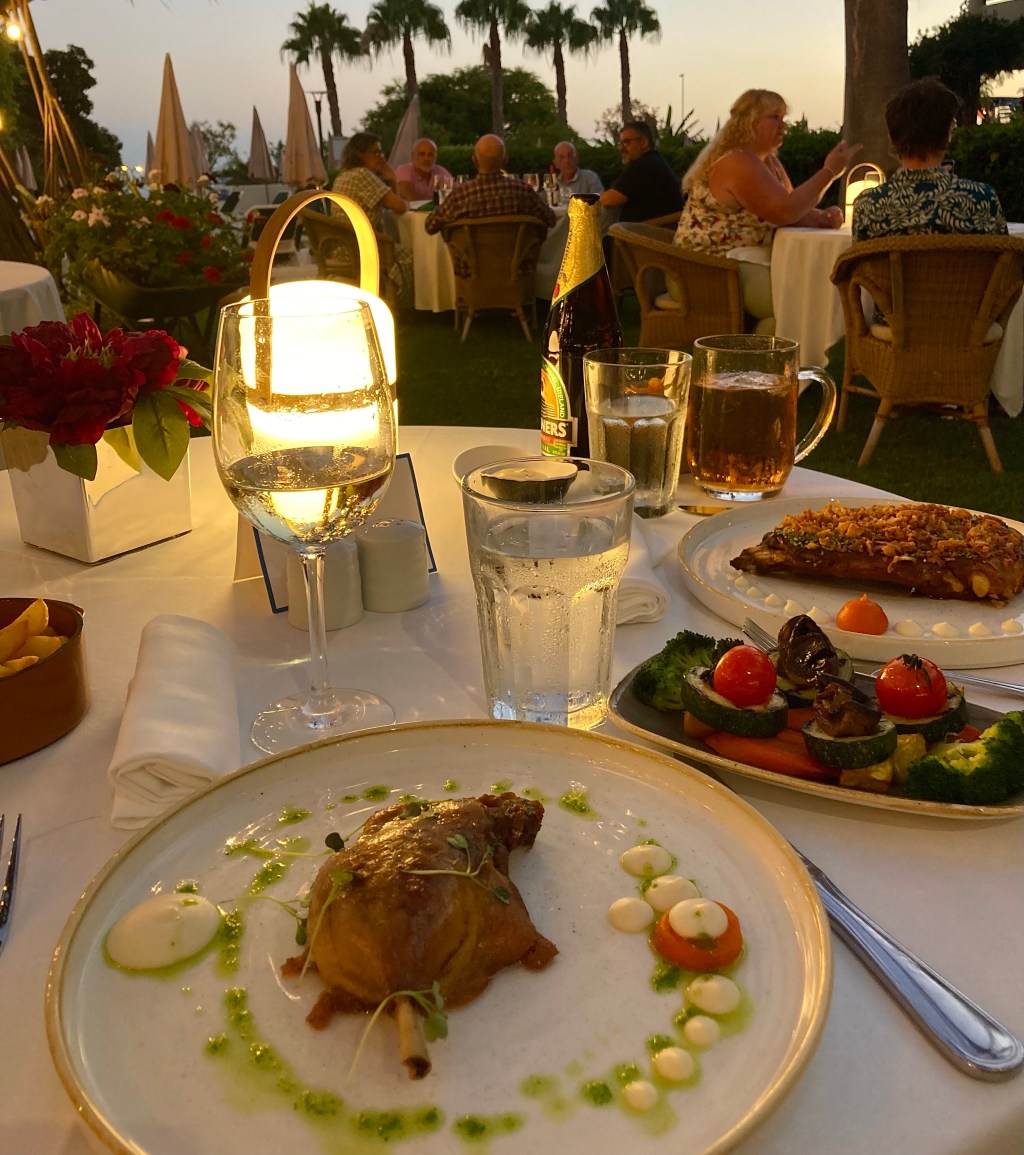
If you hadn’t already guessed, I’m a massive foodie. And that doesn’t stop at cooking, I love eating out just as much as eating in. Not only is it nice to have a break from cooking, but it’s nice to experience different settings and cuisines, branch out to new cultures, try a new combination of flavours that you would never have thought to put together. And most importantly (for me anyway) get inspiration for your own recipes. I was fortunate enough to travel a lot when I was younger so a lot of my own recipes now do take inspiration from what I have tried and loved when eating out abroad.
But let’s be honest – eating out isn’t just about the food. It’s largely about the socialising and the ambience. It’s about spending time with friends that you may not have seen for a while, spending time with loved ones and family outside of the home setting. Or if you’re someone who likes to dine out alone, it may be about “shutting down”, relaxation and taking some time out for yourself.
And let’s not forget about the convenience behind dining out (and ordering in). For example, you didn’t have the time in the morning to make your lunch for work but you know you can quickly grab something at a local café. It’s Friday night and you haven’t had a chance to go food shopping, so you and your family pop to a your favourite restaurant or takeaway where you’re guaranteed a good meal.
For these reasons, if you’re diagnosed with Coeliac Disease (especially later on in life), you may feel as if your social life is in jeopardy. You may feel as if you can no longer safely eat in your favourite places or enjoy it in the same way as you used to. I won’t lie – having Coeliac Disease (or any dietary requirement) does make dining out a bit more difficult, and you may find yourself having no choice but to cut off some of your favourite restaurants because they can’t provide you with a safe meal. But eating out is still completely and utterly possible, and I am going to show you how. These are just a few of my top tips on how I am still able to enjoy eating out with Coeliac Disease. Even if you don’t have Coeliac Disease but have other dietary needs, I can guarantee that a majority of this post will be useful for you too.
Number One: Be prepared!
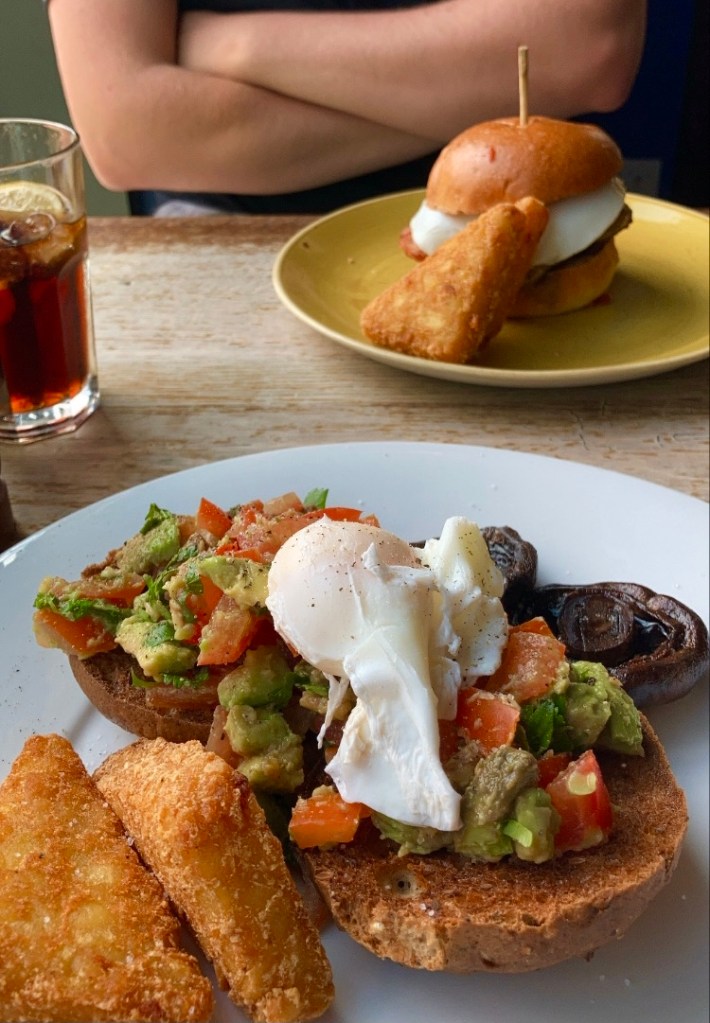
Do you even have dietary requirements if you don’t study the online menu at least ten times before you eat there? Seriously though, looking at menus is one of my favourite things to do. As soon as I hear of or see a new restaurant, you can guarantee that I’ll be searching for the online menu.
Unfortunately, having Coeliac Disease doesn’t leave you with much room to be spontaneous. It’s safe to say we can’t go out and walk into the first restaurant we see without analysing the menu first. This is why my first tip when eating out anywhere is to find that online menu and size up your options. You may find that some restaurants have a separate gluten free menu (insert heart eyes), you may find the GF (gluten free) or GFO (gluten free option available) symbols next to certain items on the menu, you may find an allergen filter so you can remove non-gf items from the menu. Or you may find absolutely nothing and a mere statement at the bottom of the menu that says “If you have any intolerances or allergies, please speak to a member of staff” (which means more research is needed).
Therefore, to avoid disappointment, always have a look online to see what options are available to you. Thankfully, Coeliac Disease is becoming more widely diagnosed and, as a result, there is more awareness so you will find most places (particularly chains) will have a gluten free menu or clearly marked options available for you to look at online.
Number Two: Don’t be afraid to ask questions
Do not be afraid to pull out your Coeliac questionnaire. Do not feel embarrassed by asking questions. Do not feel as if you are being patronising or rude by asking what may seem like obvious questions. At the end of the day, you have an autoimmune disease which requires a strict gluten free diet. Therefore, you cannot be cutting corners. You need a safe meal.
Here are just a few of the questions I ask, if they haven’t already been answered online:
1. Do you have a dedicated area where the gluten free food is being prepared? If not, what procedures do you have in place to ensure there is a minimal risk of cross contamination?
2. Will you be using a separate fryer for my gluten free food?
3. What ingredients do you use for this dish? What substitutions will you be making to ensure this is gluten free? (this may be a difficult question to ask and I don’t like asking it, but it’s so important. Some people get it wrong. They may not realise that a certain ingredient isn’t gluten free.)
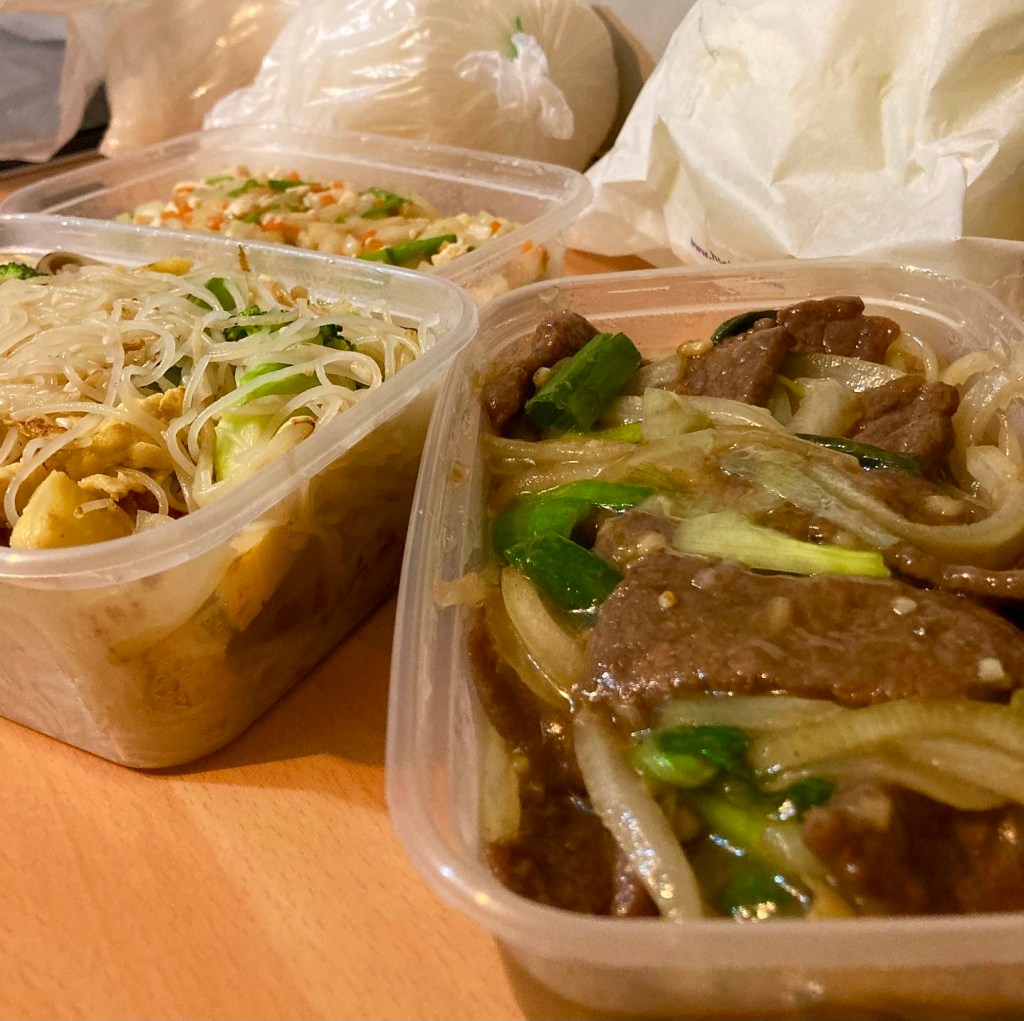
For example, I pulled out my Coeliac questionnaire with my local Chinese restaurant a few weeks ago when I found out they offered a gluten free menu. I called them up before ordering and asked them what precautions they have in place to ensure my meal is safe for me to eat: they told me that they have a dedicated bay where they prepare the gluten free food, that they use separate fryers and that they use gluten free soy sauce. They even told me that they would mark my dishes as gluten free and put them in a separate bag so that there is no confusion. It was music to my ears and I ended up with a delicious (and safe) meal.
Number Three: Tripadvisor and Google Reviews are your best friends
I have only started doing this for the past year and I wish I thought to do this sooner. It’s such a good tip (if I say so myself). When you come across a new restaurant that you would like to try, search them on Tripadvisor or Google Reviews; once you have found them, put the words “gluten free” or “Coeliac” in the review search. It should then show you the reviews that mention these words.
You will find that so many eating establishments will claim that they can cater for dietary requirements. Unfortunately, in reality a large handful of places are not knowledgable enough to cater for dietary requirements. By looking on review websites, you will get honest experiences from people who are in the same position as you, people who are looking for somewhere that can safely cater for them. In an ideal world, the reviews will also say that they can cater to your diet perfectly. Unfortunately, that’s not always the case. Save yourself the bad experience by reading someone else’s first.
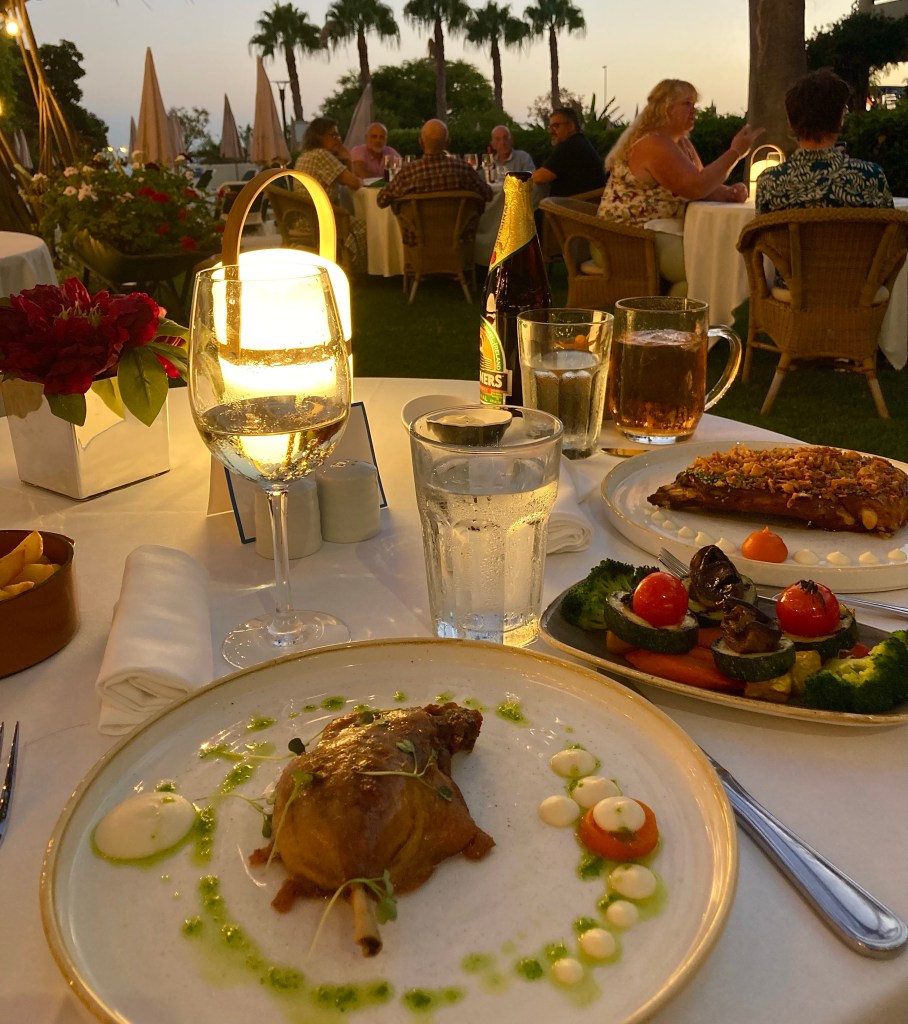
I find this tip particularly helpful when finding somewhere to eat out abroad, where you are likely to come across more private establishments that have limited information online. When my partner and I recently went to Madeira, there was a traditional Portuguese restaurant local to where we were staying. I found it on Tripadvisor where there was a handful of reviews that said they catered really well for dietary requirements and had good knowledge on Coeliac Disease. We decided to give it a try on our first night and the reviews weren’t wrong. They told me what I could and couldn’t have, adapted dishes to cater to my needs and even made me my own gluten free sauce to have with my confit duck.
Number Four: Make yourself known!
The most important tip to take into account. Imagine me screaming this at you: make yourself and your dietary needs known! You do not have a gluten intolerance, you do not have an allergy, no it is not a preference. You have Coeliac Disease. Make it known to them. And if they do not know what it is, tell them.
“I have Coeliac Disease. This is an autoimmune disease which requires a strict gluten free diet”
Unlike regular intolerances, Coeliac Disease makes cross contamination an issue. Extra precautions need to be put in place in order for you to have a safe meal. Therefore it is so important for you to make staff aware. Trust me, they would rather know than be held liable for you being unwell.
Never feel embarrassed about who you are. At the end of the day, it is far more of an inconvenience for you if you were to get poorly than it is an inconvenience for them to cater for you.
Number Five: Be aware of the risks and make up your own mind
Eating out will always carry a risk and it’s important to be aware of this. But please do not think I am saying this to scare you. Sometimes we do need to take risks. Disclaimer: this is not me saying that it’s okay to go out and chance any meal hoping it’s gluten free. Absolutely not! This is me saying that there will always be a risk and therefore it is up to you decide, after doing your research (using the tips above), as to whether you feel a restaurant is taking enough precautions.
Unfortunately no restaurant can offer you a 0% risk of cross-contamination. Even if they have separate areas and separate fryers among loads of other precautions while they are also handling gluten-containing ingredients on-site, they can’t promise that there will be no cross contamination and this is done for legal purposes (if they promise you 0% cross-contamination and gluten somehow finds its way on your plate, they have a hefty lawsuit on their hands).
For example, I went to Nando’s a short while ago and I informed them that I had Coeliac Disease. They brought a manager over who told me that because they handle gluten-containing on ingredients on-site, I need to be aware of risks. However, they said they would clean an area and all it’s utensils and wear gloves when preparing my meal. My food would also be brought out separately from those I was eating with. Here, I chose that enough precautions were being put in place and I chose to eat there (completely aware of the risks but deciding for myself that there was a relatively minimal one).
On the flip-side, I recently went on a spa day which included a lunch, where I initially ordered a gluten free toasted sandwich and a side of chips. A member of staff informed me that although the chips themselves were gluten free, they could not guarantee that the fryer they used to cook them has not been used to fry foods that are not gluten free. They informed me that no other items on their menu is fried and the chips are the only things that are fried, but because they were not working in the kitchens yesterday and the oil hasn’t been changed, they needed to make me aware of the risk. I decided to leave the chips. I have worked in restaurants and have seen chefs put all sorts of bizarre foods in fryers ‘just to see what would happen’. Although it was very rare that there would be an issue, I decided not to risk it with the information that had been given to me.
With this in mind, please do not be too hard on yourself if you take a risk and it doesn’t turn out well. We all get things wrong and not everything can be in our control, no matter how many precautions we put in place to get things right. I have been diagnosed since 2005 and I still get things wrong, but I have learnt not to beat myself up about it too much.
Look after and be patient with yourself. Take every mistake as a lesson learnt.
I hope that these tips can offer both help and peace of mind to my fellow Coeliacs. For any clarification or further advice, please feel free to message me and I will be more than happy to help.
 Jem’s Gluten Free Eats
Leave a comment